

The North Adelaide Public Golf Course redevelopment represents a once-in-a-generation opportunity to create a world-class public golf facility in the heart of Adelaide, while carefully balancing environmental considerations and maintaining the unique Adelaide Park Lands. It presents significant economic, tourism and community benefits to the state.
History of the Adelaide Park Lands
Adelaide is uniquely surrounded by an extensive 800 hectare belt of grassland and tree plantings known as the Adelaide Park Lands. Purposefully laid out by Colonel William Light’s survey in 1837, this belt has remained largely intact and preserved. At the time of Light’s survey, the idea of a perimeter park land was innovative with no known precedents. As an innovative concept, Light at the time drew no clear distinction for their intended function but envisaged a broad use by both government and community users.
The Duryea photographs of 1865 depicting the park lands, show predominately sheep grazing in grassland, almost entirely bare of trees. Extensive areas were used to dump rubbish until the early twentieth century, with some recreational areas fenced in order to protect and maintain them.
An early controversy over development arose in 1855 when a grandstand was built at the Victoria Park racecourse. The issue was not the activity of horseracing, but the erection of a permanent structure. Since this time, large areas of the original park lands have since been utilised for public facilities including roads, bridges, Parliament House, a hospital, a botanic garden, a zoo, showgrounds, a cricket oval, educational facilities, an art gallery, a museum, a library, boat sheds, railway stations, entertainment centres, and utilities.
To this day, the Adelaide Park Lands remain a highly valued asset for the city with thousands of people visiting them daily for a range of activities. As such the Adelaide Park Lands has and always will be protected and remain intact for each generation to enjoy, whilst continuing to evolve with Light’s vision to meet the needs of the community.
Visit the SA History Trust website to learn more about the history of the Park Lands.
History of golf in the Adelaide Park Lands
Formed in the 1890s, the North Adelaide Golf Club has operated over the past 130 years amongst the environmental, historical and cultural heritage of the project site.
During the early years of settlement, the project site was a dry field where golf was balanced between military use, gun practice, horses exercising and grazing of cows and sheep.
Following World War I the popularity of golf grew, resulting in the formalisation of the golf course on the park lands.
In 1921, The Adelaide City Council assumed control of the land and expanded the basic offering, creating the second public golf course of its kind in Australia.
Following World War II, the course experienced a boom in popularity which saw the Council expand the course again to offer two 18-hole courses and an Australian-first Par 3 course.
During this period of expansion, extensive tree planting was undertaken with the aim of creating a challenging golf course design. The bulk of the trees planted were exotic, introduced species with indigenous species not prioritised until the 1960s. This has led to the mixture of trees found in this area of the Park Lands today.
Since then, many South Australians and visitors to the city have enjoyed recreational golf play amongst the unique and beautiful flora and fauna that have come to call the once dry field home.
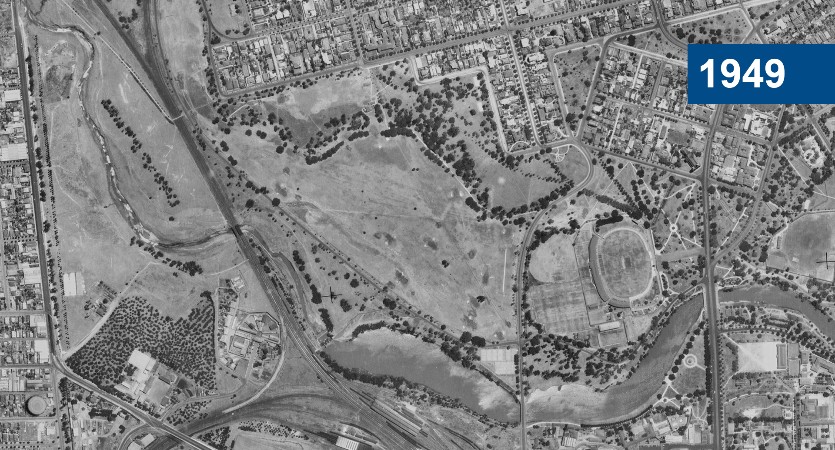
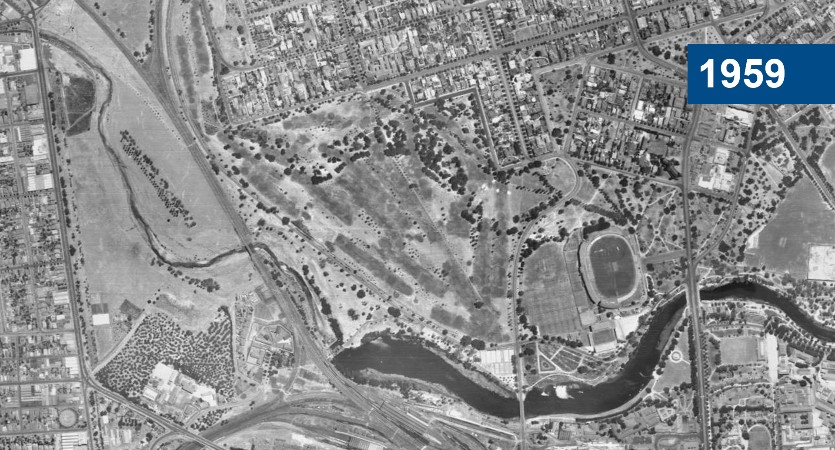
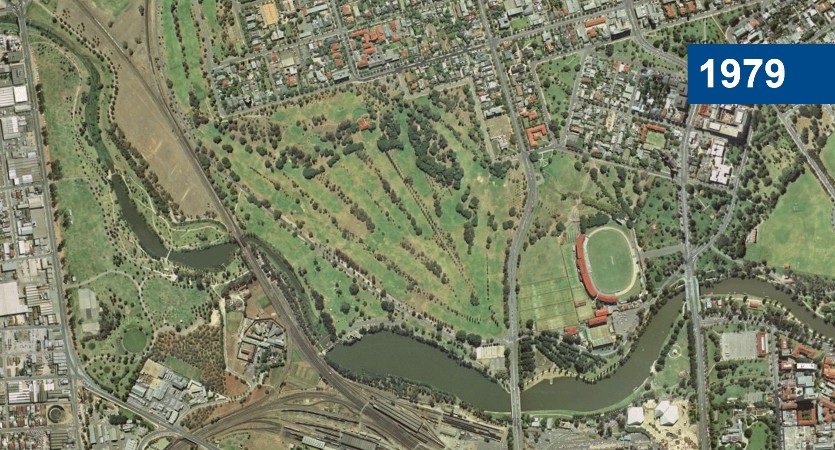
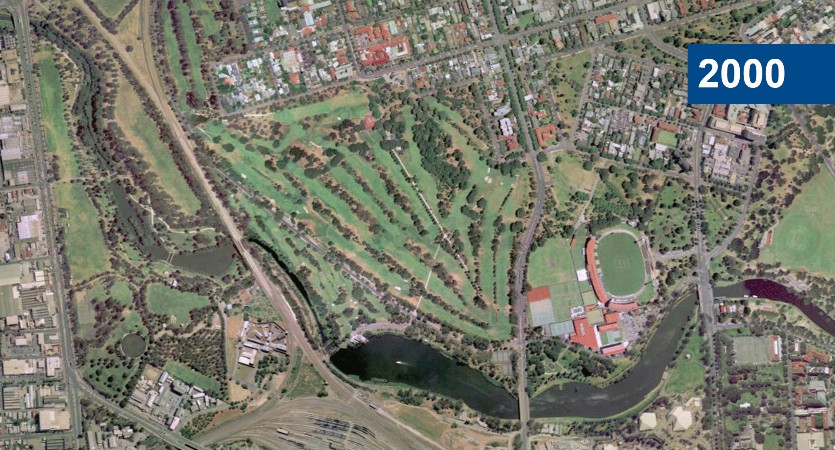
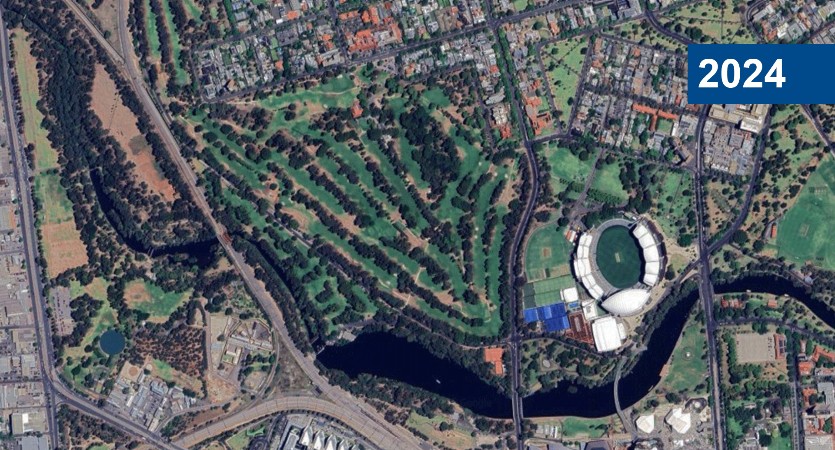
This next iteration of the golf course seeks to build upon the rich golfing history of the site by delivering a publicly-owned world-class championship course in the heart of the city that celebrates and respects the unique environmental setting and deep cultural significance to Kaurna peoples.
Economic opportunities
The investment to redevelop the publicly-owned North Adelaide Golf Course provides a significant economic opportunity through the delivery of championship quality facilities capable of attracting and hosting major international events and increasing tourism, and more importantly providing world-class public assets for public use.
In recent years, major golfing events have delivered more than $200 million in economic benefit to the state.
The attraction of major golfing events delivers surges in tourism, hospitality, and retail spending, alongside generating significant infrastructure improvements, job creation, and international profile raising.
Golf tourism
Golf tourism presents an additional significant and growing economic opportunity for the state.
Data from Tourism Research Australia shows the economic potential of golf tourism is significant, with the average domestic and international golf traveller spending significantly more per trip than non-golf travellers in Australia.
Visit the South Australian Tourism Commission website for more information on golf tourism.
Grass roots and community sport
Golf participation is growing strongly, with new and emerging demographics driving that change.
The numbers of women and girls participating in golf are showing consistent year-on-year growth, while more than 41 per cent of new members are under the age of 35.
Junior membership has more than doubled in the last five years.
There are 1.8 million Australians who play a round of golf regularly but aren’t currently members of a club.
As a central community golfing hub, the North Adelaide Golf Course will provide a world-class facility accessible to all, and players an opportunity to play on the same course, as their golfing heroes.